


In this article...
Go back to about 2016 and vaping meant one thing to most people outside the industry: clouds. Sub-ohm tanks, box mods the size of a house brick, competitions to see who could fill a room fastest. Direct to lung, or DTL, was the story everyone told about vaping, because it was the loudest one and the easiest to photograph.
That’s not really where the market is anymore. Walk into any of our stores today and what you’ll mostly see people picking up are small pod kits, run on nic salts, pulled the same way you’d pull on a cigarette. Mouth to lung, or MTL, quietly became the default while nobody was really paying attention to the shift, and there are some pretty concrete reasons why.
What MTL actually means
With MTL you draw the vapour into your mouth first, hold it there for a second, then breathe it into your lungs. That’s the exact mechanic of smoking a cigarette. DTL skips that step entirely: you pull the vapour straight into your lungs in one go, like taking a deep breath, which needs looser airflow, lower resistance coils and normally a lot more e-liquid to keep up.
That difference in draw is the whole reason MTL feels familiar to an ex-smoker in a way DTL never quite did. It’s tighter, there’s resistance behind the pull, and the sensation is close enough to a cigarette that a lot of people don’t have to relearn how to vape at all. For someone trying to walk away from tobacco, that’s not a small thing. Familiarity is what keeps a habit swap sticking.
The disposable ban did a lot of the heavy lifting
We wrote about the Tobacco and Vapes Act passing Royal Assent earlier this year, but the change that’s actually reshaped what people are buying day to day was the single-use vape ban that came into force on 1 June 2025. From that date, anything sold in the UK has to be both rechargeable and refillable, whether that’s a refillable tank or a pod that can be swapped out and bought separately.
Almost every device that meets that definition is built around the same tight-draw, pod-based format that MTL vaping runs on. So when hundreds of thousands of disposable users had to find something else, most of them didn’t land on a sub-ohm mod, they landed on a refillable pod kit that behaves the same way the disposable did.
IBISWorld’s industry data backs this up too: closed-system pod devices are the largest segment of the UK e-cigarette market, and demand for them has been climbing steadily, well ahead of the open-system, DTL-style kit that used to dominate.
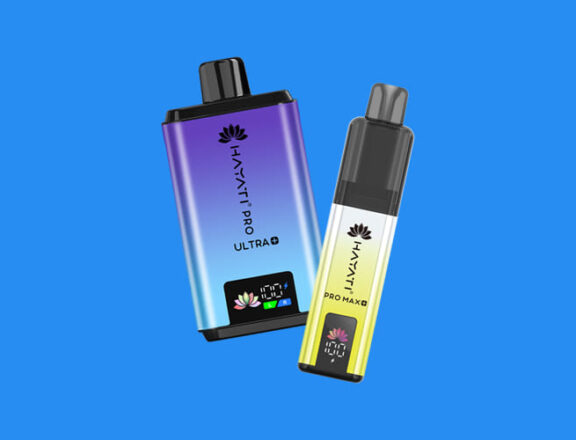
If you’re one of the people who got moved on from a disposable and haven’t settled on a replacement yet, our vape pod range covers most of what that transition looks like, and brands like Hayati have built a lot of their pod lineup specifically around that MTL, disposable-alternative feel.
Nic salts made the whole thing work properly
None of this holds together without nicotine salts. Freebase nicotine, the kind that’s dominated DTL vaping for years, gets harsher the higher the strength goes, which is fine at low power with open airflow but rough going through a tight MTL draw. Nic salts are processed differently and deliver a smoother hit even at higher strengths, which is exactly what a pod device running at low wattage needs to feel right.
Our nic salts range explains the chemistry in a bit more depth if you want it, but the short version is: nic salts are why MTL pods can deliver a proper hit without harshness, and that pairing is a big part of why the format has taken off the way it has.

It’s worth saying that this isn’t only a nic salt story though. Plenty of vapers doing MTL still prefer a 50/50 freebase e-liquid, our own Red Label is built on exactly that ratio, and it remains one of the more common starting points for people coming straight off cigarettes. There isn’t one correct answer here, just what suits the individual.
DTL hasn’t disappeared, it’s just found its actual size
None of this means direct to lung vaping is finished. It isn’t. There’s still a solid, committed community of vapers who want the bigger clouds, the flavour intensity that high-VG liquid gives at higher wattage, and the tinkering that comes with building your own coils and running a mod the way you want it. That’s a legitimate way to vape and it always will be.
What’s changed is that DTL is no longer the default entry point it was treated as for the best part of a decade. It’s become more of a specialist interest, sat alongside MTL rather than sitting above it.
For most people walking into vaping now, especially anyone coming straight from smoking, MTL is simply the more sensible starting place, and the market has reorganised itself around that fact whether anyone planned it that way or not.
If you’re weighing up where to start, or you’re moving on from a disposable now that they’re gone, that’s really the shortest way to put it: MTL gets you something that feels like the habit you’re trying to leave, and that matters more than most other specs on the box.