


In this article...
If you’ve landed here because you’re thinking about swapping cigarettes for a vape, or you’ve just picked up your first kit and you’re not quite sure what half the terms mean, you’re in exactly the right place. This is our ultimate guide to vaping.
Vaping can feel like a different world when you’re new to it. Vape Coils, ohms, nic salts, PG and VG ratios… it’s a lot to take in at once, and most guides either dumb it down too much or bury you in buzzwords.
We’re not going to do either. This guide walks through what vaping actually is, how it works, what to expect in your first few weeks, and how to avoid the mistakes that put a lot of new vapers off before they’ve given it a proper chance.
We’ve been making e-liquid and helping people switch since 2008, so most of what’s below comes from watching thousands of people go through exactly what you’re about to.
What is vaping?
Vaping means inhaling vapour produced by an electronic device, rather than smoke produced by burning tobacco. That’s the whole trick of it. A vape heats e-liquid (sometimes called vape juice) until it turns to vapour, and you inhale that instead of smoke.
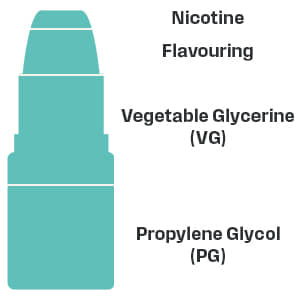
The e-liquid itself is a fairly simple mixture. It’s usually made up of propylene glycol (PG), vegetable glycerine (VG), flavourings, and nicotine, if you’ve chosen a nicotine-containing liquid. If you want the full breakdown of what’s actually in the bottle, our e-liquid ingredients guide goes through each component properly.
There’s no tobacco, no combustion, and none of the thousands of chemicals produced when tobacco burns. That last point matters more than people realise, because it’s the burning process in cigarettes, not the nicotine itself, that causes most of the harm.
Because there’s no burning involved, vaping produces vapour rather than smoke. It smells different, it behaves differently in the air, and crucially, the research so far suggests it’s a lot less harmful than smoking.
The UK Health Security Agency and the Royal College of Physicians have both said e-cigarettes are at least 95% less harmful than tobacco cigarettes, and vaping was even recommended as part of the government’s Stoptober campaign back in 2017 as a legitimate way to quit. That’s not a marketing line, it’s the official public health position.
Is vaping actually safer than smoking?
Short answer, yes, considerably. Long answer, it’s worth understanding why.
Cigarette smoke contains thousands of chemical compounds, including tar and carbon monoxide, many of which are produced specifically by the act of combustion. Vaping doesn’t involve burning anything. You’re heating a liquid to the point of vaporisation, not setting fire to dried plant matter, and that difference accounts for most of the reduced risk.
There’s also been a fair bit of noise around passive vaping over the years, usually from people trying to draw a straight line between second-hand smoke and second-hand vapour.
A widely cited study actually compared the carcinogen levels in second-hand vapour against second-hand smoke and found that second-hand vapour contained roughly the same level of carcinogens as ordinary ambient air. In other words, standing near someone vaping isn’t comparable to standing near someone smoking.
None of this means vaping is risk-free. Nicotine is an addictive substance, and if you’ve never smoked or vaped before, there’s no health reason to start. But if you’re currently a smoker weighing up your options, the evidence from bodies like the NHS and Cancer Research UK is fairly consistent: vaping is a substantially less harmful alternative, and it’s one of the more effective tools people have used to quit for good.
We’ve actually written a detailed piece on what happens to your body when you switch from smoking to vaping, timeline and all, if you want the full picture before you commit to anything.
Choosing your first device
This is where most people get stuck, and honestly, it’s where most competitor guides oversell one type of device because it happens to be what they sell the most of. We’d rather just walk you through the real options.
Pod kits
Pod kits are usually the best starting point for anyone coming straight from cigarettes. They’re small, simple, and most of them are either refillable with e-liquid or use pre-filled pods, so there’s very little to learn before you’re using one properly.
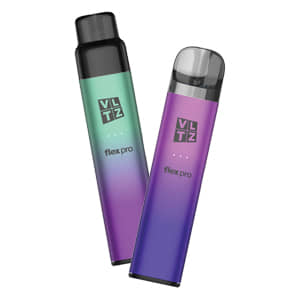
They tend to suit mouth-to-lung vaping, which is the inhale style most similar to smoking a cigarette, and that familiarity makes the switch a lot less jarring. If reliability matters more to you than bells and whistles, we’ve rounded up the best refillable pod and tank kits, worth a look before you buy.
Vape pens and Starter Kits
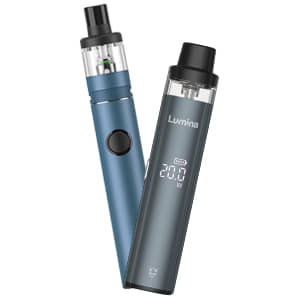
Vape pens and starter kits sit a step up from pods. Slightly larger, sometimes with a screen or adjustable settings, but still built with beginners in mind. If you like the idea of having a bit more control without diving into anything technical, this is a sensible middle ground. Our best vape starter kits roundup goes through the current options if you’re at this stage.
Box mods
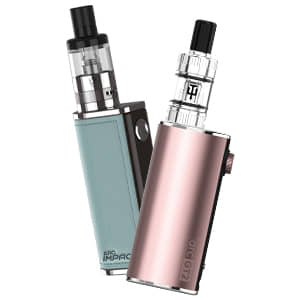
Box mods are for people who already know they want more customisation, whether that’s adjusting wattage, swapping coils with different resistances, or chasing bigger clouds and more direct-lung hits. There’s nothing wrong with starting here if you’ve done your homework, but we wouldn’t usually recommend it as a first device. There’s more to learn and more that can go wrong while you’re still getting used to the basics.
A decent rule of thumb when picking between them: think about how you actually smoked, not how you’d like to vape in an ideal world. If you smoked a pack a day and inhaled fairly deeply, your first kit should reflect that. Our full range of vape guides breaks each device type down in more detail if you want to compare specs before you buy.
Understanding e-liquid (it’s simpler than it looks)
Once you’ve picked a device, the e-liquid is really where the experience lives. Get this part wrong and even a great kit will feel disappointing.
The two things that matter most are the VG/PG ratio and the nicotine strength. If you want a proper primer on the full range of e-liquid types out there, our one stop guide to e-liquids is a good place to start.
Higher VG liquids are thicker, produce more vapour, and tend to suit sub-ohm devices and direct-lung vaping. Higher PG liquids are thinner, give more of a throat hit, and generally suit pod kits and mouth-to-lung setups better. Most beginner-friendly e-liquids are balanced somewhere in the middle, so you don’t need to overthink this one straight away.
Where to start with nicotine strength
Nicotine strength is the bit people genuinely get wrong most often. A lot of new vapers assume they should start low, the way you might ease into anything new, but that’s usually the opposite of what actually helps. If you’re switching from cigarettes, going in with too little nicotine is one of the main reasons people give up and go back to smoking within the first couple of weeks.
The logic is simple: your brain is used to a certain amount of nicotine, and if the vape isn’t giving you close to that, you’ll feel like something’s missing, even if you can’t quite put your finger on why.
As a rough starting point, heavier smokers tend to do better on nicotine salts at higher strengths, since nic salts are gentler on the throat at higher concentrations than freebase nicotine.
Lighter or social smokers often get on fine with lower strength freebase liquids. It’s not an exact science, and there’s a bit of trial and error involved for almost everyone, but starting closer to your actual habit rather than “just to be safe” tends to make the switch stick.
How to actually vape properly
Even with the right kit and the right liquid, plenty of people have a rough first go simply because nobody told them the basics.
Before you use a new coil for the first time, prime it. That means putting a couple of drops of e-liquid directly onto the wicking material before you fill the tank and fire the device, giving the coil a chance to soak up liquid rather than firing dry.
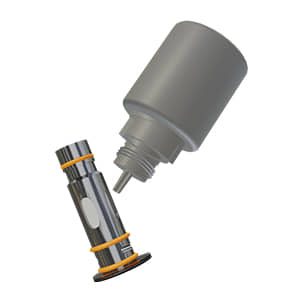
We’ve got a step-by-step guide to priming your atomiser if you want to see it done properly. Skip this step and you’ll likely get a burnt taste on your very first puff, which puts a lot of people off unnecessarily.
Once you’re set up, take it slow. Short, gentle puffs at first, especially if you’re using a mouth-to-lung device, will feel far more natural than trying to inhale the way you might imagine vaping should feel. You can always adjust airflow or wattage once you’ve got a sense of what you enjoy, and our guide to vape airflow and wattage explains what each setting is actually doing.
If you notice a burnt or “off” taste at any point after the first few uses, that’s usually a sign your coil needs changing, not that something’s wrong with the device. Coils are consumable parts, similar to a filter, and how long one lasts depends on how much you vape and what liquid you’re using, something we cover in more depth in why some vape coils last longer than others.
If your vapour output suddenly drops or you’re getting leaks, that’s often flavour or airflow settings needing a small adjustment rather than a fault. For anything trickier, our ultimate vape troubleshooting guide covers most of the common issues people run into.
Vaping etiquette and the law in the UK
A few practical things worth knowing so you don’t get caught out.
You need to be 18 or over to buy vaping products in the UK, and retailers are required to check. Vapes are regulated under the Tobacco and Related Products Regulations, which cap tank sizes, e-liquid bottle sizes, and nicotine strength in freebase liquids.
As of 1st June 2025, single-use disposable vapes were banned in the UK, so if you’re used to picking up a disposable, you’ll need to move over to a refillable kit instead, which in most cases works out considerably cheaper anyway once you’re past the initial cost of the device.
We’ve written a full breakdown of what the ban means and how to prepare for it in our disposable vape alternatives article (even though the ban happened a while ago), and the wider Tobacco and Vapes Bill explains what’s changing more broadly if you want to stay ahead of it.
On where you can actually vape, there’s no single blanket law covering every public space the way there is with smoking, but plenty of individual venues, workplaces, and transport providers have their own policies banning it indoors.
The general courtesy that’s developed among vapers is to treat it the same way you’d treat smoking: step outside, don’t vape around children or in enclosed public spaces without asking, and if in doubt, check the venue’s own rules rather than assuming. Heading abroad? Rules vary a lot by country, so it’s worth a read of our guide to vaping on holiday before you pack.
Using vaping to quit smoking
If quitting is the whole reason you’re reading this, it helps to know you’re not relying on guesswork. The NHS lists vaping among the tools it supports for quitting smoking, and describes it as substantially less harmful than continuing to smoke.
Over more than fifteen years, it’s become one of the more consistently effective methods people actually stick with, largely because it replaces both the nicotine and the physical habit of smoking, rather than asking you to give up both at once.
A few things tend to make the difference between people who switch successfully and people who drift back to cigarettes. Getting your nicotine strength right early on, as covered above, is a big one. So is picking a device that matches how you actually smoked rather than what looks impressive. And so is giving yourself a bit of patience in the first week or two, since it’s genuinely normal for a new vape to feel different from a cigarette at first, even when everything’s set up correctly.
If cost is part of what’s holding you back from making the switch properly, it’s worth knowing that vaping tends to work out significantly cheaper than smoking once you’re past the first kit purchase. Our vaping hacks and money saving tips piece has some practical ways to keep costs down while you find your feet.
Looking after your vape
A little maintenance goes a long way. Wipe down your tank and connections every so often, especially if you’ve had any leaking, our ultimate guide to cleaning your vape kit covers exactly how to do it without damaging anything. Try to avoid leaving your device somewhere very hot or very cold for long periods, as extreme temperatures can affect both the battery and the e-liquid inside.
Change your coil when the flavour starts to fade or turn slightly burnt rather than waiting for it to fail completely, and if you’re using a device with a removable battery, our vape battery guide and how to safely charge your e-cigarette are both worth reading, small habits like not mixing old and new batteries make a real difference to how long your kit lasts.
Where to go from here
Vaping isn’t complicated once you’ve got the basics down, but there is a genuine learning curve in the first couple of weeks, and almost everyone hits a small snag or two along the way. That’s normal. The main thing is starting with the right setup for your own habits rather than copying what worked for someone else.
If you’re still deciding on a first kit, have a browse through our New to Vaping hub or our beginner’s guide to vape coils and atomisers, where we go much deeper into specific devices, e-liquid types, and troubleshooting than we’ve had room for here. And if you’d rather just ask someone directly, our team deals with exactly these questions every single day, so don’t be shy about reaching out.
Frequently Asked Questions
Vaping carries some risk, mainly from nicotine, but current evidence from bodies including the UK Health Security Agency puts it at least 95% less harmful than smoking. It’s not risk-free, but it’s a significantly safer alternative for existing smokers.
Most coils last somewhere between one and three weeks with regular use, though this varies a lot depending on the e-liquid used, how often you vape, and the device itself. A burnt taste or reduced vapour is usually the sign it’s time to change it.
There’s no single nationwide indoor vaping ban the way there is for smoking, but many workplaces, venues, and transport operators set their own rules. Always check the venue’s policy rather than assuming it’s allowed.
Nic salts are gentler on the throat at higher nicotine strengths, making them popular for pod kits and heavier smokers. Freebase nicotine gives more of a noticeable throat hit and is typically used at lower strengths in higher VG liquids.
Not necessarily strong, but matched to your habit. Heavier smokers generally need a higher nicotine strength to avoid feeling like something’s missing, which is one of the more common reasons people give up on vaping too early.