

In this article...
You’ve done the hard bit. You’ve put the cigarettes down and picked up a vape instead. And now you’re coughing, maybe more than you did when you were smoking, and it’s easy to wonder whether you’ve made a mistake.
You certainly haven’t. But it’s worth working out what’s behind the cough, because there are really two possible explanations, and they need different fixes. It might be the vape itself, which is usually down to something small you can change. Or it might be your old smoker’s cough finally making itself heard, now that your lungs have the chance to clear out.
Here’s how to tell them apart, what to do about each, and the signs that mean it’s time to see a doctor.
Note: This article is just general information, not medical advice. If you are worried about your cough, contact your GP or NHS 111.

- Coughing is one of the most common side effects when you switch, and it’s usually easy to manage
- It can be the vape (strength, technique, power or liquid) or your lungs clearing out after smoking, and sometimes it’s both
- A cough that gets worse after you stop smoking is normal and, according to the NHS, a good sign that your airways are cleaning themselves
- Small changes to your kit, nicotine strength or how you vape usually help
- Don’t drop your nicotine so low that you end up craving cigarettes, because the goal is to stay off them
- A cough lasting three weeks or more should always be checked by a GP, whatever the cause
Is it your vape or your lungs?
There’s no test you can do at home, and a cough can have more than one cause. But there are a few clues that point one way or the other. Treat this as a rough guide, not a diagnosis.
| It may be the vape if… | It may be your smoker’s cough if… |
| You cough during or straight after a puff | The cough is chesty or phlegmy, rather than a tickle |
| Your throat feels scratchy, dry or harsh | You’re bringing up mucus, or you’re wheezing |
| It changed when you changed liquid, strength or device | It began or got worse in the weeks after you stopped smoking |
| You notice a burnt or odd taste | It happens whether or not you’ve just vaped |
If you recognise both columns, that’s fine. Plenty of people have a bit of each, and the advice below covers both.
If it’s your smoker’s cough coming through
This is the one that surprises people. You’d expect your cough to disappear the moment you stop smoking. Often it does the opposite.
Your airways are lined with tiny hairs called cilia, which sweep mucus out of your lungs. Smoking damages them, so mucus builds up. Bupa explains that smoke irritates your airways, damages the cilia and makes you produce more mucus than normal, and the cough is your body’s way of clearing it.
When you stop smoking, the cilia start to recover and get back to work. Mayo Clinic says that as they clear the built-up mucus, you may cough more than you did while you were smoking, and that this can last a few weeks or up to a year, often settling on its own. The NHS Better Health page on quitting calls the extra coughing and phlegm “a good sign that your body is doing its job of cleaning out your airways”.
It also gives a timeline for the good news. Within 48 hours, your lungs are clearing mucus. Between 3 and 9 months, coughs, wheezing and breathing problems should improve, with lung function rising by up to 10%. Our own troubleshooting guide says the same thing, that a cough from quitting should ease after a few weeks. Everyone’s different, so use these as a guide rather than a deadline.
What can help while it clears:
- Drink plenty of fluids and rest. The NHS recommends both for a cough
- Try hot lemon and honey if you like it. The NHS is upfront that the evidence is limited, so don’t expect miracles. Honey isn’t for babies under 1
- Use a steamy shower or a humidifier if your throat is sore
- Ask a pharmacist before taking a cough medicine, as some aren’t suitable for everyone

If it’s the vape
Coughing is a known side effect of vaping. The NHS lists coughing, dry mouth and throat, and mouth and throat irritation among the common ones. The reassuring part is what it says next: “Making small changes to your vape products or how you vape should help”, and side effects “are usually easily managed and should not stop you from vaping as a way to quit smoking”.
How to soothe your cough
There are no magical cures for a smoker’s cough; you just have to ride it out for the most part, but there are things you can do to ease the process. Here are the small changes that tend to make the biggest difference.
Slow down your draw.
Vaping isn’t like smoking. The coil needs a moment to heat up and turn liquid into vapour, so sharp, hard pulls don’t suit it. Our guide to mouth to lung versus direct lung vaping explains that long, gentle, steady draws work best, and that mouth to lung, the style closest to smoking, is the better fit for most people switching. You also don’t need to hold the vapour in, because most nicotine is absorbed in your mouth and the top of your throat.

Check your nicotine strength.
A strength that’s too high is usually the main cause of coughing, according to our guide to new vapers and troubleshooting guide. But there’s a balance. The NHS says to start at a nicotine level that matches how much and how often you smoked, because you need enough to manage cravings.
Too low, and you risk reaching for a cigarette. If you’re unsure, a specialist vape shop or your local stop smoking service can help you find the sweet spot.
Try a smoother liquid.
Nicotine salt e-liquids are designed to feel smoother in the throat, even at higher strengths, so they’re worth a look if your throat feels harsh. You can browse our nicotine salt range. The mix of PG and VG matters too. Higher PG liquids give a stronger throat hit, which can irritate some people, while a higher VG liquid is often gentler.

Look after your coil.
A new coil needs priming, which means soaking the wick so it doesn’t heat up dry. Add a few drops of liquid, wait around five minutes, then vape. If you get a burnt taste that doesn’t go away after priming, the coil is probably finished and needs replacing.
Keep your tank topped up, because vaping on empty causes dry hits, and stay within the power range printed on the coil. We’ve got more on this in how to make your e-liquid last longer.
Drink more water.
A dry mouth and throat is common, so sip water throughout the day. This helps everything stay "lubricated", for lack of a better phrase.
Get the right kit.
The NHS notes that finding the right device and nicotine strength can take time, so stick with it. It lists simple vape kits, pod devices and vape pens as good choices. If it isn’t working for you, ask for advice. You can also read more in why does vaping make me cough.
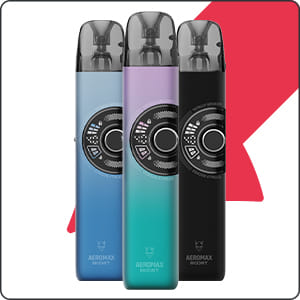
We recommend our Flex Pro, or Aeromax Boost if you're just starting out.

The NHS advice is clear on one more thing. If you do get side effects, get advice from a stop smoking adviser or specialist vape retailer before you give up on vaping as a way to quit.
Don’t go back to cigarettes
It can feel tempting. When you’re coughing, a cigarette might even seem to help for a minute. But Mayo Clinic is clear that smoking again may reduce the cough, but it harms your health over time. The cough is a sign of healing, not a sign you need to stop.
If you’re struggling, speak to your local NHS stop smoking service for free advice and support. And if you’re still having the odd cigarette alongside your vape, the aim is to switch completely. We’ve written about what to bring up with your doctor if you’d like some help working that out.
When to see a doctor
A cough that comes from quitting smoking or from vaping is common, but a cough can also be a sign of something else. Most aren’t serious, and the NHS says a cough is rarely a sign of something like lung cancer. But it’s sensible to check, especially if you smoked for a long time.
See a GP if:
- Your cough has lasted three weeks or more
- It’s a long-standing cough that’s getting worse, or has changed
- You’re losing weight for no reason
- You keep getting chest infections
- You have a persistent chesty cough with phlegm, breathlessness or wheezing. The NHS says to see a GP about possible COPD, particularly if you’re over 35 and smoke or used to smoke
Get urgent help (call NHS 111 or get an urgent GP appointment) if:
- You’re coughing up blood
- You have chest pain
- You find it hard to breathe
- Your cough is very bad or getting worse quickly
Mayo Clinic adds that a cough after quitting that lasts beyond a month, causes pain or keeps you awake at night is worth getting checked too.
FAQ
It could be the vape, such as nicotine strength, technique or a burnt coil, or your lungs clearing out after smoking. The NHS describes the extra coughing and phlegm after quitting as a good sign. Often it’s a bit of both.
Bupa says a smoker’s cough usually improves within about a month of stopping. Mayo Clinic says the increased cough can last from a few weeks up to a year. If it lasts three weeks or more, see a GP.
It can, if your strength is too high. But the NHS says to match your nicotine to how much you smoked, so you don’t end up with cravings. A specialist vape shop or stop smoking service can help.
The NHS says vaping isn’t risk free but is less harmful than smoking, and that coughing and throat irritation are common side effects that are usually easy to manage. If you have breathlessness, wheezing or a cough that won’t go, see a GP.
Not usually. The NHS says side effects shouldn’t stop you vaping as a way to quit, but to get advice first. Try the small changes above, and speak to an adviser if it carries on.
Yes. As your cilia recover, they clear built-up mucus. The NHS calls it a good sign. If you cough up blood, get urgent help.
Sources
- NHS Better Health: Vaping to quit smoking
- NHS Better Health: What could happen when you quit smoking
- NHS: Cough
- NHS: COPD symptoms
- NHS: Stop smoking services help you quit
- Bupa: Smoker’s cough
- Mayo Clinic: Coughing more after quitting smoking, what’s the deal?
- Totally Wicked: The ultimate vape troubleshooting guide
- Totally Wicked: MTL vs DL vaping
- Totally Wicked: Hints and tips for new vapers